Since private gold ownership was made illegal by FDR in 1933, collectible (numismatic) coins have been worth more than their melt value. Their premium was significant in the late 70’s, being worth 2-3x the value of the gold they were made of. It compressed in the early 80s, and exploded again in the late 80’s after PCGS, the premiere gold coin grading service, was founded. Premiums reached 8x over the price of gold. If you applied that premium to the price of gold today, it means one coin made of $5,000 worth of gold would sell for $40,000.
The pattern is consistent: when the gold market is stable, numismatic coins command a premium. When gold is in a bull market, the premiums compress because people are so excited to buy the metal they forget about the coin. Then, when the market normalizes, the premium re-appears. While this premium compression and expansion cycle are a regular occurrence, never since the establishment of this asset class in 1933 have premiums been as low as they are right now.
This chart shows ‘97-‘26, but note that premiums were higher still in the 80’s:
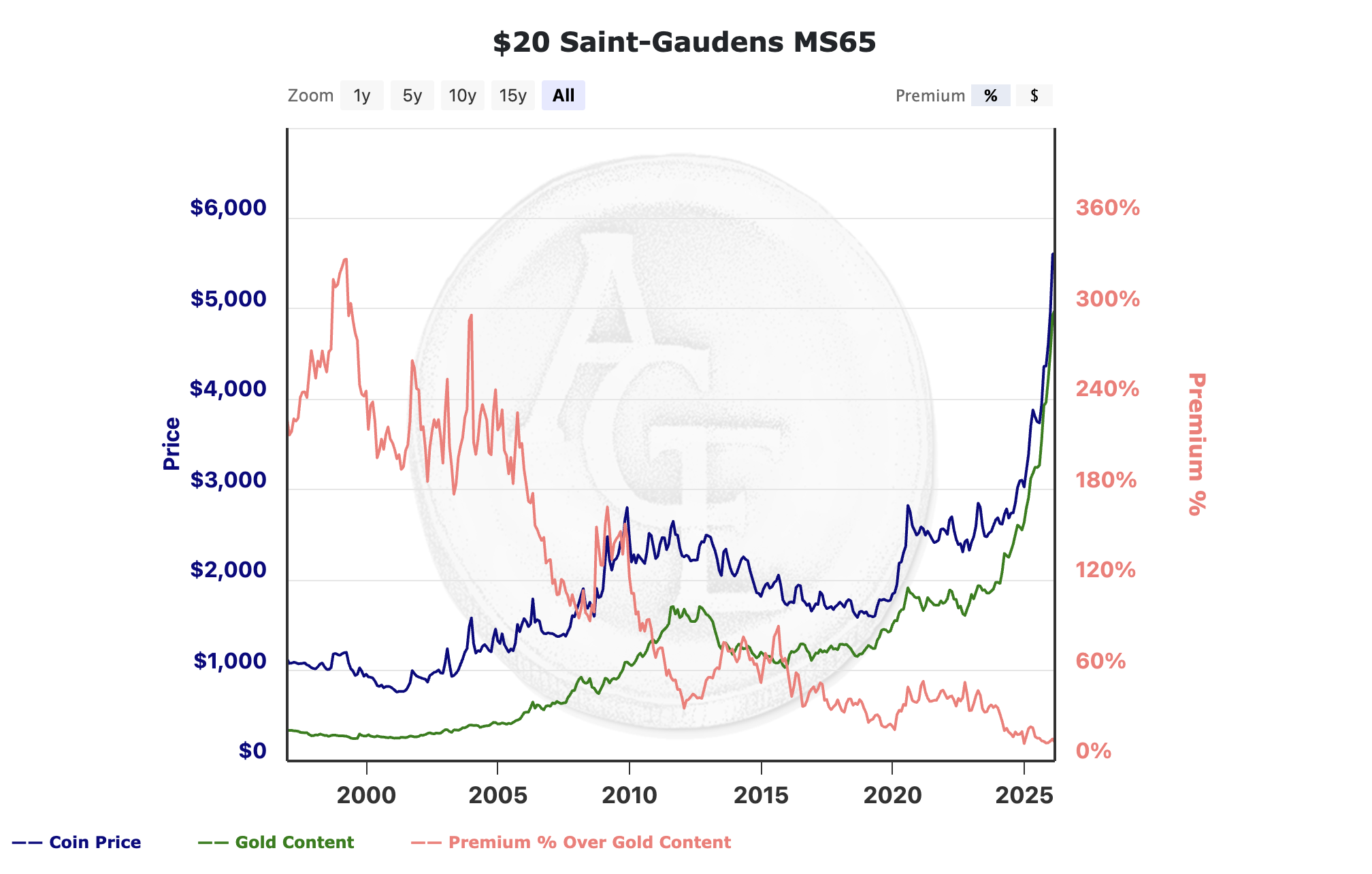 Right now gold dealers say they are selling pre-1933 numismatic gold coins for the same or even less than they sell standard, newly minted coins. That means no only is the premium gone, it’s actually negative.
If you’d like to own gold right now, you have the opportunity to purchase pre-1933 gold with its history of a numismatic premium and gain exposure to two markets for the price of one: (1) the gold market, for which you pay the price of gold and (2) the numismatic market, for which you pay nothing.
You get to enter that market for free.
It gets better: in person, a dealer will charge you 105% of the melt value of an American Eagle 1oz gold coin. That’s the standard coin in the US. These are popular, liquid, and recognizable. Pre-1933 gold will cost you the same or less. Why are people less inclined to buy numismatic gold than standard gold if the former has the potential to be more valuable in the future? (1) they just don’t care (2) Pre-1933 gold contains 0.9675oz of gold. No one wants to do that math all the time if they just want gold. Honorable mention: most of the bid in gold right now is from countries, not individual collectors. Countries are the last buyer that would care about a collectible premium on gold.
The craziest part of all is that since no one wants to buy pre-1933 gold, dealers often find it cheaper to simply melt the gold down and sell it as metal. Normally, dealers buy a coins for around 95% of melt value. If they buy a pre-1933 coin for 95% of melt, which they can do nowadays, they have two options: wait a very long time for someone to come in and buy it from them for a measly 103% of melt value, or just melt it down themselves and take the profit now. Right now, they’re choosing the latter. (https://forums.collectors.com/discussion/1102457/with-current-spot-prices-is-pre-33-gold-at-risk-of-being-melted)
So not only are numismatic coins being sold for zero premium, they’re actually becoming more scarce at the same time.
The catch is that this is a high timeframe market. That premium on numismatic gold will probably come, but it could be a decade or two. Personally, I think it’s likely to arrive in a reasonable amount of time. I feel confident that in a highly financialized world where speculation increasingly pays individuals more than their labor, people will be eager to find a way they can speculate on gold. It could be a couple years before the gold market normalizes, but I think strong new premiums should open up in these coins when it does. These premiums have been compressing for decades, and the existing collectors market is probably profoundly depressed. I would be if I’d been buying these coins for 25 years, filled with hope, only to see the premium on them disappear entirely.